



Acetyl-CoA Carboxylase
ACC, Acetyl Coenzyme A Carboxylase
Acetyl-CoA carboxylase catalyzes the ATP-dependent carboxylation of acetyl-CoA, a rate-limiting step in fatty acid biosynthesis. Acetyl-CoA carboxylase has crucial roles in fatty acid metabolism and is an attractive target for drug discovery against diabetes, cancer, and other diseases.
In animals, there are two major isoforms of ACCs, ACC1, and ACC2, which are encoded by different genes and display distinct tissue and cellular distribution. The first committed step of fatty acid synthesis (FASyn) is mediated by ACC, which in mammals is encoded by two related enzymes ACC1 and ACC2, which catalyze the ATP-dependent carboxylation of acetyl-CoA to form malonyl-CoA. ACC1 encodes a cytoplasmic isoform that is thought to be the predominant isoform controlling FASyn, whereas ACC2 is tethered to the mitochondrial outer membrane, where localized malonyl-CoA production blocks carnitine palmitoyltransferase-1 (CPT-1) function to prevent fatty acids from entering the mitochondria to undergo fatty acid oxidation (FAOxn).
All Product Categories
-
Acetyl-CoA Carboxylase Inhibitors
(67)
View all products
-
Acetyl-CoA Carboxylase Agonist
(1)
View all products
-
Acetyl-CoA Carboxylase Activators
(10)
View all products
-
Acetyl-CoA Carboxylase Modulators
(3)
View all products
-
Acetyl-CoA Carboxylase Degrader
(1)
View all products
-
Acetyl-CoA Carboxylase Ligand
(1)
View all products
-
Acetyl-CoA Carboxylase Related Products (91)
Related Products (91)

-
Antibodies (5)
-
Procyanidin C2
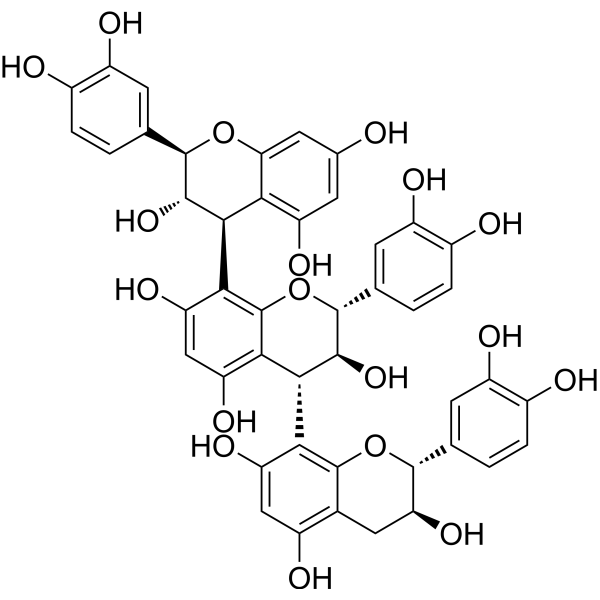 0 ImagesCat. No.: HY-N7521CAS No.: 37064-31-6Synonyms: Procyanidine C2Procyanidin C2 (Procyanidine C2) is a lipid metabolism regulator and antioxidant with free radical scavenging activity. Procyanidin C2 down-regulates ACC, SREBP-1c, FAS, SCD-1 and PPARγ. Procyanidin C2 increases the level of phosphorylated AMPKα and inhibits the level of phosphorylated mTOR. Procyanidin C2 reduces lipid accumulation, alleviates oxidative stress, enhances fatty acid oxidation and improves mitochondrial function. Procyanidin C2 can be used in the research of non-alcoholic fatty liver disease.
-
ACC1/2-IN-3
 0 ImagesCat. No.: HY-42632CAS No.: 2131091-32-0ACC1/2-IN-3 (example 66) is an ACC1 and ACC2 inhibitor with an IC50 value of 1-10 nM for both. ACC1/2-IN-3 can be used for the study of diseases mediated by ACC, such as metabolic disease.
-
Tralkoxydim
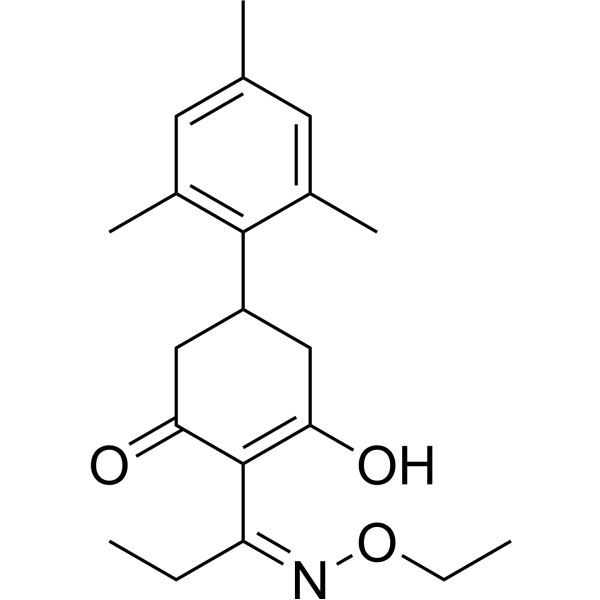 0 ImagesCat. No.: HY-111223CAS No.: 87820-88-0Synonyms: PP604; ICIA 0604; FD-4026Tralkoxydim is a cyclohexanedione herbicide that inhibits Acetyl-CoA Carboxylase in corn.
-
Cycloxydim
 0 ImagesSynonyms: BAS 517-02HCycloxydim (BAS 517-02H) is a cyclohexanedione oxime herbicide. Cycloxydim can inhibits the acetyl-CoA carboxylase.
-
ACC1/2-IN-1
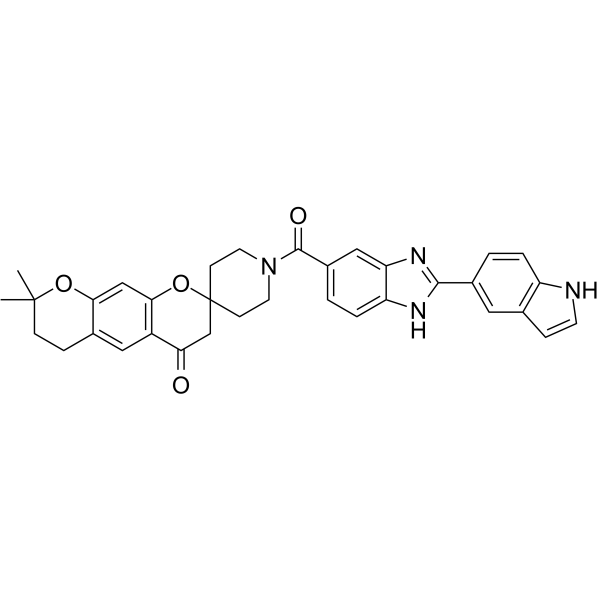 0 ImagesCat. No.: HY-147930CAS No.: 2350219-22-4ACC1/2-IN-1 (compound 4s) is a potent ACC1/2 inhibitor with IC50 values of 98.06 and 29.43 nM for ACC1 and ACC2, respectively. ACC1/2-IN-1 can be used for cancer research.
-
S-2E
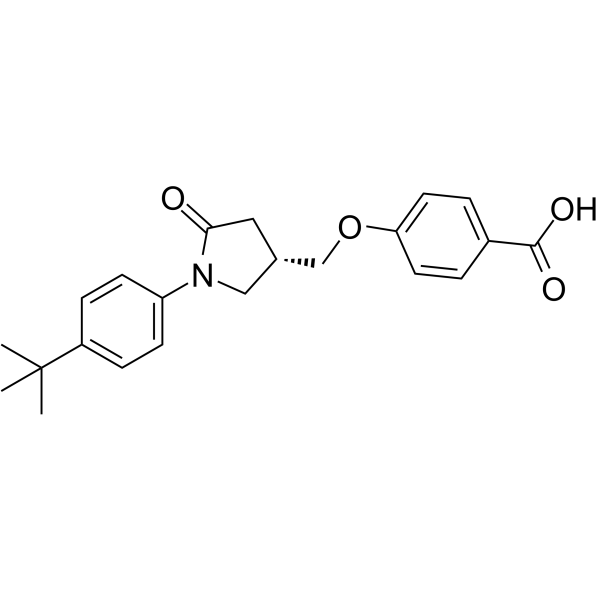 0 ImagesCat. No.: HY-139134CAS No.: 155730-92-0S-2E is an orally active and noncompetitive HMG-CoA reductase and acetyl-CoA carboxylase inhibitor. S-2E has an anti-hyperlipidemic action. S-2E has the potential for familial hypercholesterolemia and mixed hyperlipidemia research.
-
THR-β agonist 9
 0 ImagesCat. No.: HY-174887CAS No.: 2920045-74-3THR-β agonist 9 is a potent, selective, and His435 mutation-sensitive THR-β (EC50: 3.2 nM) agonist. THR-β agonist 9 has moderate selectivity (approximately 10-fold) and good activation capacity (EC50: 134.2 nM to 515.5 nM) for multiple His435 mutants (H435A, H435Y, and H435R). THR-β agonist 9 has the potential to be used in the study of dyslipidemia, metabolic dysfunction-associated steatohepatitis (MASH), or resistance to thyroid hormone (RTH).
-
(Rac)-Spirotetramat-enol
 0 ImagesCat. No.: HY-169009CAS No.: 382608-09-5(Rac)-Spirotetramat-enol is a ligand of acetyl-CoA carboxylase (ACC) that can be used for the synthesis of PROTAC ACC degrader-1 (HY-169008). (Rac)-Spirotetramat-enol binds to the carboxyltransferase domain and inhibits ACC activity in insects and spider mites. (Rac)-Spirotetramat-enol exhibits insecticidal activity against nymphs of the black bean aphid. (Rac)-Spirotetramat-enol can be used in studies related to black bean aphid infestation.
-
ACC-IN-1
 0 ImagesCat. No.: HY-173565CAS No.: 2270839-89-7ACC-IN-1 (Compound B1) is an allosteric inhibitor of acetyl-CoA carboxylase (ACC). ACC-IN-1 targets ACC to regulate lipid metabolism, which can improve liver steatosis, inflammation related to non-alcoholic steatohepatitis (NASH).
-
PF-07905428
 0 ImagesCat. No.: HY-189391CAS No.: 3027705-65-0PF-07905428 is a topical acetyl-CoA carboxylase (ACC) inhibitor designed to minimize systemic exposure. PF-07905428 inhibits ACC, reduces sebaceous lipid production in the skin. PF-07905428 can be used for the research of acne vulgaris.
-
ACC1-IN-2
 0 ImagesCat. No.: HY-161976CAS No.: 3027705-67-2ACC1-IN-2 (Compound 16) is an ACC1 inhibitor with an IC50 of 7.3 nM. ACC1-IN-2 can be used in the study of acne.
-
CP-610431
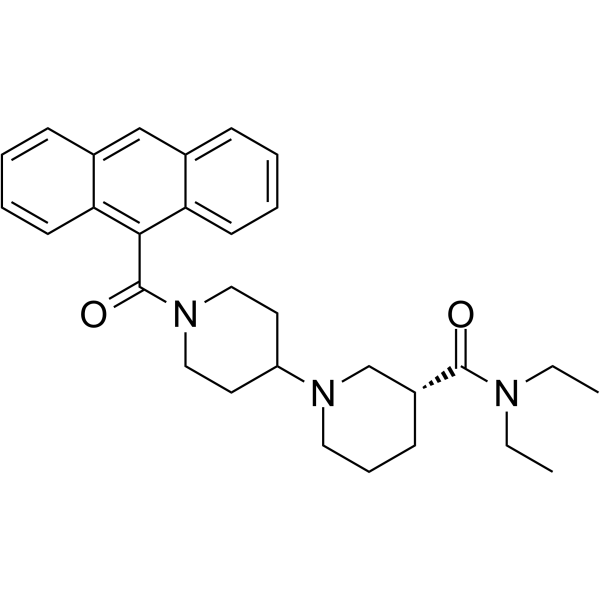 0 ImagesCat. No.: HY-16946CAS No.: 591778-83-5CP-610431 is a reversible, ATP-uncompetitive, isozyme-nonselective acetyl-CoA carboxylase (ACC) inhibitor. CP-610431 inhibits ACC1 and ACC2 with IC50s of ~50 nM. CP-610431 can be used for the research of metabolic syndrome.
-
Andrimid
 0 ImagesCat. No.: HY-N14257CAS No.: 108868-95-7Andrimid is a peptide Antibiotic and acetyl-CoA carboxylase inhibitor. Andrimid is produced by symbiotic bacteria of the genus *Enterobacter* residing in the brown planthopper Nilaparvata lugens. Andrimid exhibits strong specific activity against Xanthomonas campestris pv. oryzae. Andrimid shows no or only weak activity against Gram-positive and Gram-negative bacteria, including most plant pathogenic bacteria. Andrimid can be used in studies related to bacterial infections and rice bacterial blight.
-
ND-654
 0 ImagesCat. No.: HY-127108CAS No.: 1434641-55-0ND-654 is a highly selective acetyl-CoA carboxylase (ACC) inhibitor (IC50: ACC1=3 nM, ACC2=8 nM). ND-654 reduces hepatic lipogenesis, decreases neutrophil recruitment and promotes anti-inflammatory M2 macrophage polarization. ND-654 is promising for research of nonalcoholic steatohepatitis and hepatocellular carcinoma.
-
IMA-1
 0 ImagesCat. No.: HY-150191CAS No.: 2315406-63-2IMA-1 is an inhibitor that inhibits the interaction between arachidonic acid 12-lipoxygenase (ALOX12) and acetyl-CoA carboxylase 1 (ACC1). IMA-1 significantly blocks the progression of diet-induced non-alcoholic steatohepatitis (NASH) in male mice and crab-eating monkeys, and does not cause hyperlipidemia. IMA-1 can be used for the study of NASH.
-
PROTAC ACC degrader-1
 0 ImagesCat. No.: HY-169008PROTAC ACC degrader-1 is an Acetyl-CoA Carboxylase PROTAC degrader with insecticidal activity, which induces ACC protein degradation via the ubiquitin-proteasome system. PROTAC ACC degrader-1 exhibits significant dose-dependent insecticidal activity against Aphis craccivora nymphs. PROTAC ACC degrader-1 can be used in studies related to Aphis craccivora infestation.
-
Dimethoxycurcumin-d6
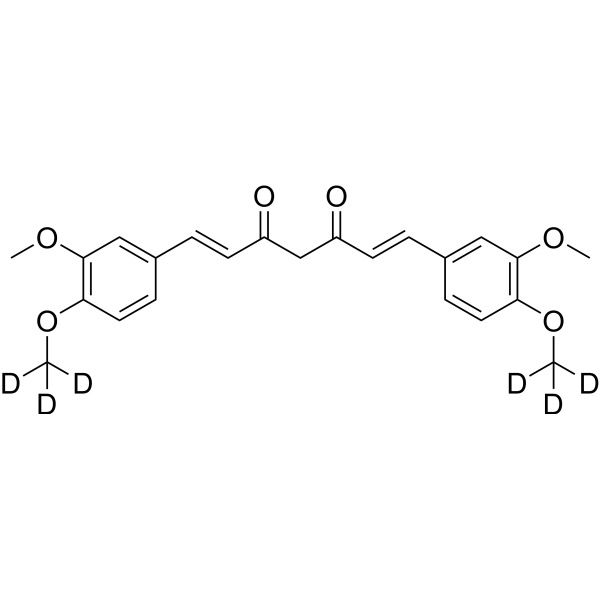 0 ImagesCat. No.: HY-100977SCAS No.: 3006902-95-7Synonyms: DiMC-d6; CHC 004-d6; Di-O-methylcurcumin-d6Dimethoxycurcumin-d6 (DiMC-d6; CHC 004-d6; Di-O-methylcurcumin-d6) is the deuterated-labeled Dimethoxycurcumin (HY-100977). Dimethoxycurcumin (DiMC) is a curcuminoid compound found in Curcuma longa. Dimethoxycurcumin is also an orally active thioredoxin reductase inhibitor (IC50 = 5.4 μM) and androgen receptor antagonist. Dimethoxycurcumin inhibits thioredoxin reductase, leading to oxidized thioredoxin accumulation, ROS production, DNA damage, glutathione depletion, mitochondrial membrane potential decrease, ATP depletion, S phase arrest, and apoptosis. Dimethoxycurcumin inhibits NF-κB, NADPH oxidase subunits, ATP synthase subunits, CDK4, cyclin-D1, FASN, ACC, and the IRS2-PI3K-Akt pathway, while activating AMPK, ERK, and JNK. Dimethoxycurcumin can be used for research on cancer, arsenic-induced hepatotoxicity, and tuberculosis.
-
LCB-2122
 0 ImagesCat. No.: HY-180575CAS No.: 2210298-14-7LCB-2122 is an adenosine-like nucleoside analogue bearing a C2'-stereogenic all-carbon quaternary center. LCB-2122 can prevent Doxorubicin (HY-15142A)-induced cardiomyocytes apoptosis with an IC50 of 0.5 μM and prevent Imatinib (HY-15463)-induced apoptosis. LCB-2122 can activate AMPK signaling and induce the phosphorylation of AMPK and its downstream substrate, acetyl-CoA carboxylase (ACC). LCB-2122 can reduce Doxorubicin-induced mitochondrial damage. LCB-2122 can be used for the research of heart failure.
-
Quizalofop-P
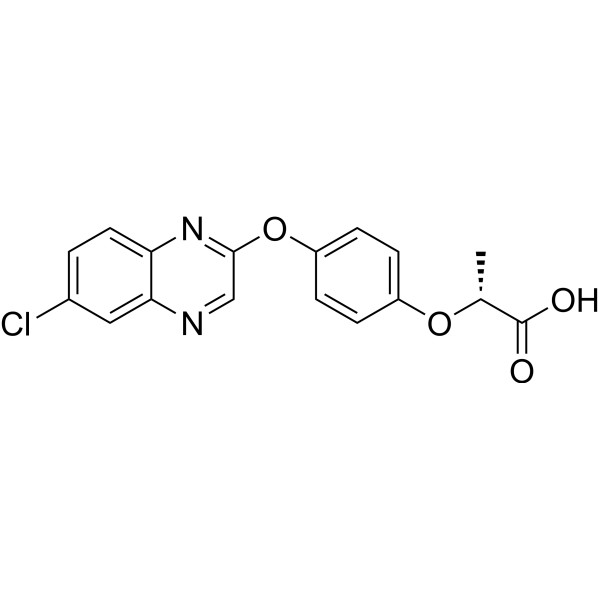 0 ImagesCat. No.: HY-117142CAS No.: 94051-08-8Quizalofop-P is absorbed through weed stems and leaves, conducts upward and downward in plants, accumulates at the top and intermediate meristems, inhibits cellular fatty acid synthesis, and makes weeds necrotic. Quizalofop-P is highly selective between grass weeds and dicotyledonous crops.
-
Gigantetrocin
 0 ImagesCat. No.: HY-169783CAS No.: 134955-48-9Gigantetrocin is a bioactive annonacetyl coenzyme from goniothalamus giganteus.




